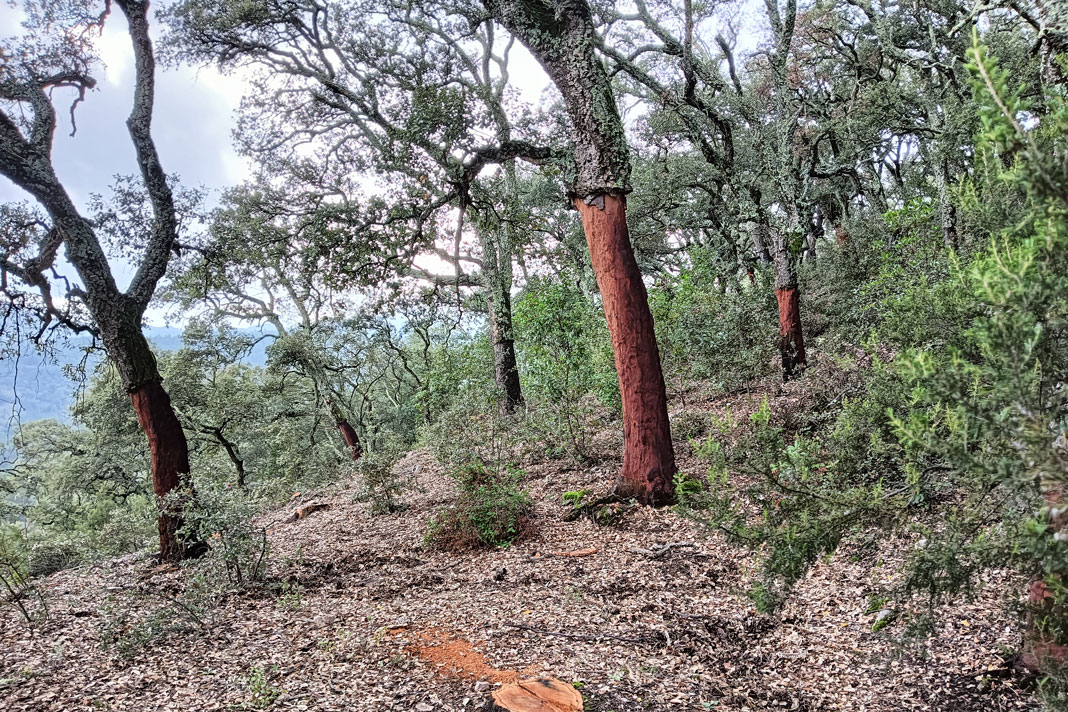
The sustainable management of cork oak forests, cork harvesting, and the use of cork as a material play a key role in addressing climate change, fostering rural development, and promoting the bioeconomy. They also contribute to the conservation of cork oak ecosystems, one of the most biodiverse in the European Union, which act as a natural barrier against desertification and forest fires.
The FUTURECORK project, carried out during 2024 and 2025, aimed to adapt and optimise the Spanish cork sector to current and future ecological, economic, and social challenges through innovation, the preservation of biodiversity, the creation of quality employment, and the promotion of the bioeconomy, while advancing gender equality and supporting the long-term vitality of rural communities.
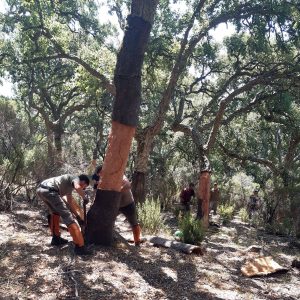
One of the actions carried out was the development of an officially certified training course for cork harvesters. As this traditional rural profession faces a lack of generational renewal, the first and most crucial link in the cork value chain, the harvesting of cork from the tree, is increasingly at risk. The course was designed to ensure the transfer of knowledge and skills to future generations, while recognising, professionalising, and enhancing the value of the profession. The training courses were delivered in the Spanish regions with the greatest extent of cork oak forests: Andalusia, Catalonia, and Extremadura. Further information is available in the news article here, and the course manual can be downloaded here.
The project has also carried out various activities to promote and add value to the use of cork, mainly the cork that is currently underutilised or exported to other countries because of its low value for cork stoppers. To this end, an integrated management plan for cork sector by-products has been developed to identify, quantify, and valorise the by-products generated throughout the cork value chain, prioritising those produced in the largest quantities and with the greatest potential for recycling into new products, thereby preventing their disposal or underuse.
The project has also delivered significant progress in several other key areas, including strengthening the resilience of cork oak forests to wildfires through sustainable forest management, developing integrated management plans to control Phytophthora and Lymantria in cork oak ecosystems, and promoting the restoration of degraded cork oak woodlands. The outcomes of these actions, together with the results of all other project activities, are presented in the project reports, available on the FUTURECORK website.