The FoRISK network has published the first of a two-part factsheet series on wildfire management, developed by its expert members in collaboration with FOEN/BAFU, the Swiss Federal Office for the Environment.
Titled Wildfire Prevention in the Alpine Region: Fire-Resilient Forest Management in Switzerland, the publication examines how Alpine forests are becoming increasingly exposed to wildfire risk, and why proactive approaches are essential. Rather than aiming to eliminate fire entirely, it introduces a different perspective: the need to manage and coexist with fire in more resilient landscapes.
What should we know about wildfire risk in Switzerland?
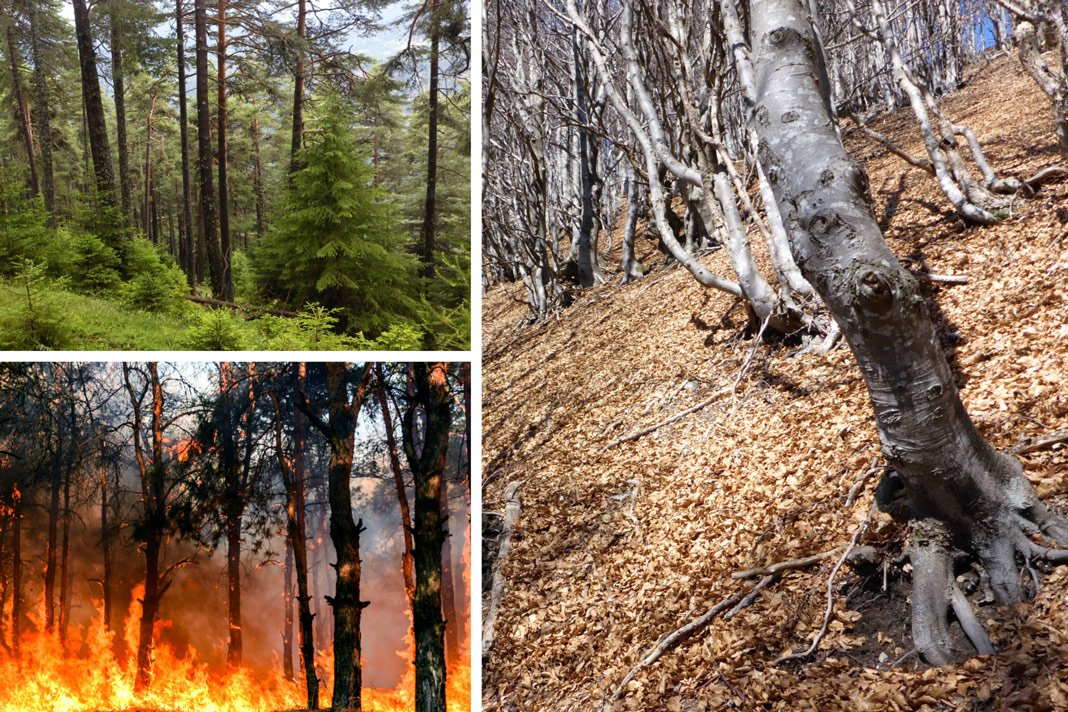
Wildfires are becoming a risk throughout the country. Climate change is altering the frequency and intensity of wildfire events in mountain regions, and what were once rare occurrences are becoming more common. According to the factsheet, this signals that wildfires must now be treated as a growing risk for Alpine ecosystems and communities.
Sustainable forest management as a prevention tool
Although weather and terrain cannot be controlled, the factsheet highlights that forest structure, composition, and fuel characteristics can be actively shaped. This places sustainable forest management at the centre of wildfire prevention, with the potential to influence how wildfires start, spread, and affect landscapes.
Prevention through coordinated, long-term action
The publication stresses that addressing wildfire risk requires more than emergency response. It underscores the importance of cross-sector collaboration, informed forest management practices, and sustained efforts over time to build resilience and reduce impacts.
These messages offer only a snapshot of the broader framework set out in the factsheet, which combines scientific insights with practical considerations for implementation. The full publication takes a more detailed look at the principles, measures, and strategic approaches behind fire-resilient forest management in Alpine contexts.
The factsheet is available to read here, and a second publication in the series is expected to follow.
The factsheet was produced by the FoRISK network in collaboration with FOEN/BAFU (Swiss Federal Office for the Environment), and first published on 10 June 2026.